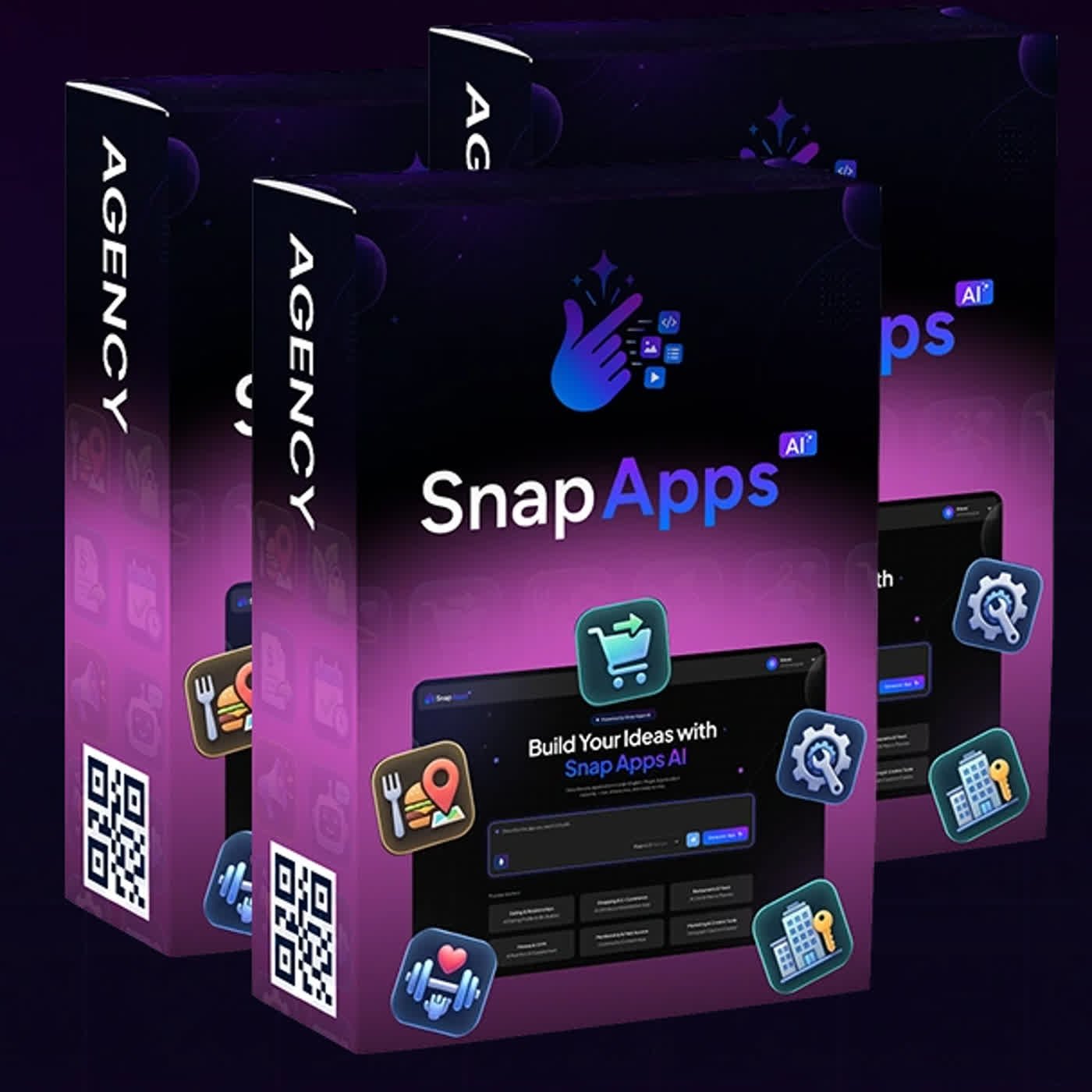
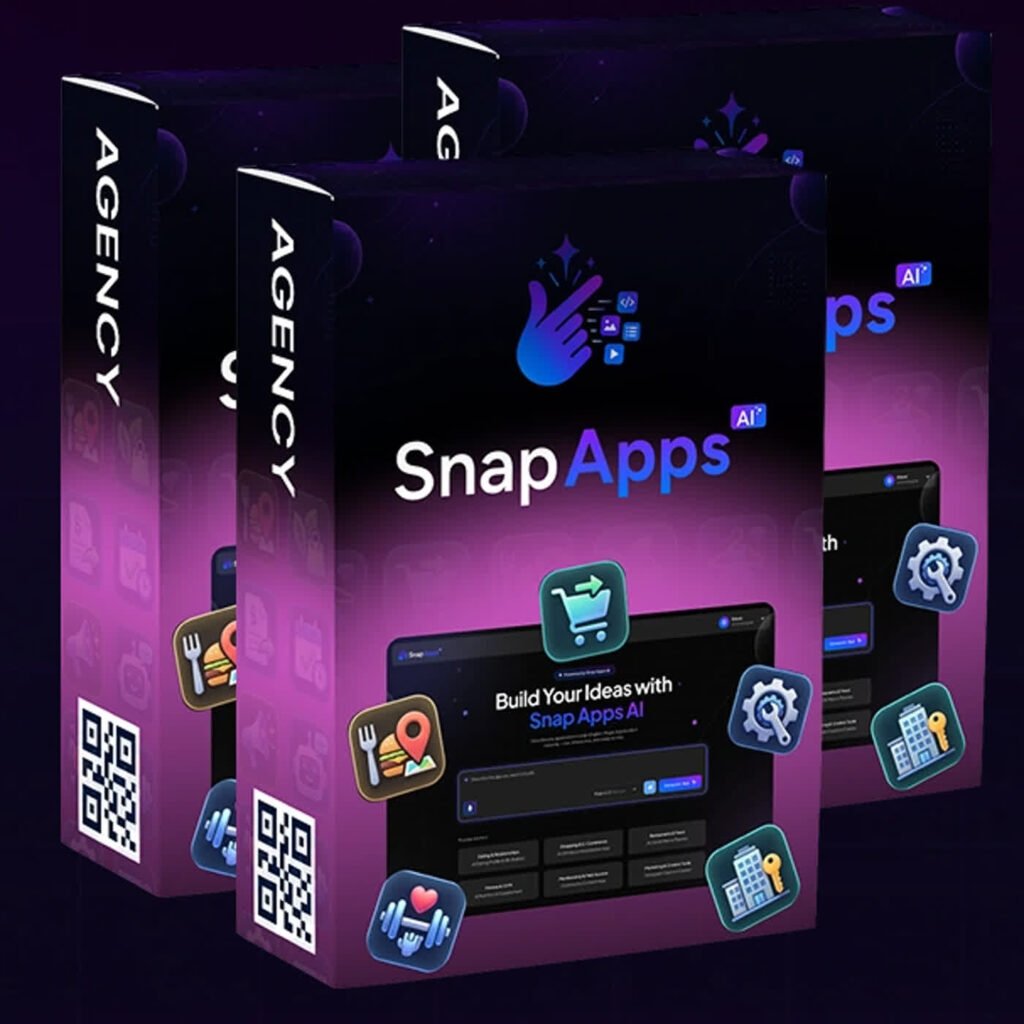
Get Exclusive Discount On Snap Apps AI Today!
Use Coupon Code At Checkout For Instant Savings:
👉 Claim Special Launch Discount Now
Snap Apps AI Review – Quick Verdict
Snap Apps AI is a no-code platform designed to help users create AI-powered web applications using simple text prompts through Telegram and a visual dashboard. It focuses on reducing technical barriers by handling hosting, branding, and deployment for you. While it offers an accessible way to launch basic AI apps, prospective buyers should carefully evaluate its feature limits, upgrade costs, and intended use before purchasing.
For entrepreneurs, freelancers, affiliate marketers, and agencies looking to create simple branded AI applications without learning programming, Snap Apps AI presents an interesting option. However, it should not be viewed as a replacement for professional software development when advanced customization or enterprise-grade functionality is required.
Best For:
- Beginners with no coding knowledge
- Freelancers selling AI app creation services
- Digital marketers
- Small agencies
- Entrepreneurs validating app ideas quickly
Not Ideal For:
- Professional software developers
- Enterprise applications
- Highly customized SaaS products
- Businesses requiring complete infrastructure ownership
Quick Summary
Snap Apps AI aims to simplify AI app development by combining natural language prompts, automated app generation, white-label branding, hosted deployment, and commercial licensing into one platform. It emphasizes ease of use rather than deep software engineering capabilities.
According to the available product information, users describe the app they want using Telegram, after which the platform generates a working application that can be customized, branded, and connected to a custom domain. The platform also includes pre-built templates and supports commercial use, making it attractive for users interested in selling AI-powered applications or client services.
This review is based on an evaluation of publicly available product information, official feature descriptions, pricing details, demonstrations, and available documentation. It does not rely on unverified personal experience, and any claims that cannot be independently confirmed are identified accordingly.
Introduction
Building software has traditionally required programming skills, development teams, significant budgets, or months of learning. No-code and AI-assisted development platforms are changing that landscape by making application creation more accessible to non-technical users.
Artificial intelligence has expanded beyond generating text and images. Today, it is increasingly being used to automate software creation, allowing entrepreneurs to transform ideas into functional digital products with far less technical effort than before.
This shift has created a growing market for AI-powered app builders that promise to simplify development through natural language instructions instead of manual coding.
Snap Apps AI positions itself within this category. Rather than asking users to work inside a traditional development environment, the platform centers its workflow around conversational prompts, allowing users to describe the type of application they want while the system handles much of the technical implementation.
That concept naturally raises several questions:
- Can it actually build useful applications?
- How much customization is possible?
- Who will benefit most?
- What are its practical limitations?
- Does the pricing represent good value?
This review examines those questions by evaluating the platform’s publicly available information, documented features, pricing structure, intended audience, and realistic use cases.
What Is Snap Apps AI?
Snap Apps AI is a cloud-based AI application builder that allows users to create white-label AI-powered web apps through natural language instructions instead of traditional programming. It combines AI-assisted development, hosting, branding tools, and deployment into a single workflow.
According to the official product information, Snap Apps AI enables users to communicate their app idea through Telegram. The platform interprets these prompts and generates a working application that can later be refined using an integrated editor before being published under the user’s own branding.
Unlike traditional development platforms that require coding knowledge, server management, database configuration, and deployment pipelines, Snap Apps AI attempts to automate much of that process.
The platform is presented as an all-in-one solution that includes:
- AI-assisted app generation
- Hosted infrastructure
- White-label branding
- Custom domain support
- Lead generation forms
- Commercial usage rights
- Ready-made templates
Rather than functioning as a traditional software development framework, it is better understood as a productivity platform intended to help users create functional AI-powered applications faster than manual development would normally allow.
Examples of applications mentioned in the available documentation include:
- Shopping assistants
- Restaurant recommendation tools
- Coaching applications
- Marketing utilities
- Recipe apps
- Local business tools
- Gift recommendation apps
- Dating-related applications
The vendor also suggests that the platform can produce many additional app types depending on the prompts provided, although the full range of supported functionality cannot be independently verified from the available documentation.
Who Created Snap Apps AI?
Snap Apps AI is attributed to Dr. Amit Pareek and Atul Pareek, who are presented as experienced digital product creators with multiple software launches in the online marketing space.
The product documentation identifies Dr. Amit Pareek and Atul Pareek as the creators behind Snap Apps AI. It also references their previous experience launching software products and notes an established customer support system.
While a creator’s track record cannot guarantee the future performance of any software product, experience in maintaining previous launches may provide additional confidence regarding ongoing updates and customer support.
As with any software purchase, buyers should evaluate the platform primarily on its current capabilities rather than marketing reputation alone.
Who Is Snap Apps AI For?
Snap Apps AI appears best suited for users who want to build and deploy AI-powered web applications without programming knowledge. Its strongest value lies in reducing technical complexity while enabling commercial use.
Based on the documented features, the platform may be suitable for several groups.
Freelancers
Freelancers can potentially use the platform to create branded applications for clients without hiring developers, allowing them to expand their service offerings.
Digital Marketers
Marketing professionals may use simple AI tools for lead generation, customer engagement, niche utilities, or promotional campaigns.
Agency Owners
White-label branding allows agencies to deliver applications under their own company identity rather than promoting another platform.
Small Business Owners
Businesses seeking lightweight AI tools for customer interaction or information delivery may find value in a simplified development process.
Entrepreneurs
Individuals testing new software ideas may appreciate being able to prototype concepts more quickly than through traditional development.
Complete Beginners
One of the platform’s biggest selling points is accessibility. Users without coding experience may find it significantly easier to launch basic AI applications than learning full-stack development.
These intended audiences align with the product’s emphasis on simplicity, hosted infrastructure, and commercial licensing.
Who Should Avoid Snap Apps AI?
Although Snap Apps AI lowers the technical barrier to creating applications, it is not designed for every type of user. Those requiring deep customization or enterprise-level software should consider more flexible development solutions.
You may want to consider other options if you need:
- Highly customized SaaS products
- Complex business workflows
- Enterprise software
- Proprietary backend infrastructure
- Full ownership of hosting architecture
- Advanced database engineering
- Custom APIs requiring extensive programming
The available documentation also notes that users wanting complete control over their hosting infrastructure may find the platform limiting because applications remain hosted within the vendor’s ecosystem.
Similarly, professional software developers building sophisticated commercial products will likely require more flexible development environments than those offered by an AI-assisted no-code platform.
The Main Problem Snap Apps AI Solves
Snap Apps AI is designed to remove many of the technical and financial barriers that traditionally prevent people from building software applications. Instead of focusing on coding, users can focus on describing their ideas.
Creating an application usually involves numerous challenges:
- Learning programming languages
- Hiring developers
- Managing hosting
- Configuring servers
- Deploying software
- Maintaining infrastructure
- Handling updates
For many entrepreneurs, these obstacles increase both cost and time before an idea reaches the market.
Snap Apps AI attempts to streamline this process by combining multiple stages into a single platform. Rather than requiring users to assemble several different services, it offers AI-assisted app creation, hosting, branding, and deployment within one ecosystem.
This approach may be particularly valuable for users who prioritize speed, ease of use, and faster idea validation over extensive software customization.
How Does Snap Apps AI Work?
Snap Apps AI follows a conversational workflow in which users describe an application idea, receive an AI-generated version, customize it, and then publish it using the platform’s hosted infrastructure.
According to the available product information, the general workflow consists of four primary stages.
Step 1: Describe Your Idea
Users begin by sending instructions through Telegram, explaining the type of application they want to create in natural language rather than writing code.
Step 2: AI Generates the Application
The platform processes the request and produces an initial version of the application that users can preview and evaluate.
Step 3: Customize the Output
Instead of accepting the first draft unchanged, users can refine the generated application using built-in editing tools, modify branding, adjust layouts, and personalize the experience before publishing.
Step 4: Launch Under Your Own Brand
Once satisfied, users can connect a custom domain, apply their own branding, and publish the application through the platform’s hosted environment without managing servers or deployment manually.
One notable aspect mentioned in the product information is support for multiple AI models rather than relying on a single AI engine. The vendor states that different tasks can be routed to different models depending on suitability, although detailed technical implementation has not been publicly documented.
Key Features Explained
Snap Apps AI combines AI-assisted app generation, white-label branding, cloud hosting, prompt-based creation, and ready-made templates into one platform. Instead of simply listing features, it’s important to understand how each one can reduce development time, simplify deployment, or create commercial opportunities—and where its limitations may exist.
A long feature list doesn’t automatically make software valuable. The real question is whether those features solve practical problems for the intended audience.
1. AI App Generation Through Natural Language
The platform’s headline feature is its ability to generate applications from conversational prompts rather than traditional programming.
Instead of writing code, users explain their idea in plain language. The AI then creates an initial version of the application based on those instructions.
Why this matters:
- Eliminates the biggest technical barrier for beginners
- Speeds up early-stage development
- Makes rapid idea testing possible
- Reduces reliance on freelance developers
However, users should expect to refine AI-generated output rather than assuming every first draft will be production-ready.
2. Telegram-Based Workflow
Unlike many no-code builders that require users to learn a complex dashboard first, Snap Apps AI integrates Telegram into the creation process.
The concept is intentionally conversational, allowing users to describe what they want in a familiar messaging environment.
Potential advantages include:
- Mobile-friendly workflow
- Lower learning curve
- Faster brainstorming
- More natural interaction
For users already comfortable with messaging apps, this approach may feel more intuitive than traditional drag-and-drop development interfaces.
3. Built-In Visual Editor
AI rarely produces perfect output on the first attempt.
Recognizing this, Snap Apps AI includes an editor that allows users to adjust generated applications before publishing.
This is important because successful AI-assisted development almost always involves:
- Fine-tuning layouts
- Updating branding
- Revising content
- Improving user experience
- Correcting AI mistakes
The editor helps bridge the gap between automated generation and human customization.
4. White-Label Branding
For many businesses, branding is just as important as functionality.
Snap Apps AI allows users to publish applications under their own identity instead of displaying the platform’s branding.
This can be valuable for:
- Agencies
- Consultants
- Freelancers
- Local marketing companies
- SaaS startups
White-label capability may also increase perceived professionalism when delivering applications to clients.
5. Managed Cloud Hosting
Hosting is often overlooked until deployment becomes complicated.
According to the available documentation, Snap Apps AI hosts the applications it generates, removing the need for users to configure servers themselves.
Benefits include:
- Faster deployment
- Reduced technical maintenance
- No server configuration
- Simplified publishing
The trade-off is that users remain dependent on the vendor’s infrastructure rather than managing their own hosting environment.
6. Lead Capture Forms
The platform supports lead generation forms inside applications.
Rather than creating apps solely for user interaction, businesses can potentially use them to:
- Collect email subscribers
- Generate sales inquiries
- Capture customer information
- Build marketing lists
For marketers, this adds business value beyond the application itself.
7. Multiple AI Models
One of the more interesting claims is support for multiple AI models instead of relying on only one provider.
If implemented effectively, this approach could improve:
- Content generation
- Coding assistance
- Reasoning quality
- Response accuracy
- Overall flexibility
The documentation does not publicly explain the technical routing process, so buyers should evaluate this feature based on actual platform performance rather than marketing claims alone.
8. Ready-Made Templates
Creating everything from scratch isn’t always necessary.
Snap Apps AI includes pre-built templates covering several popular business categories.
Templates may help users:
- Launch faster
- Learn by example
- Reduce setup time
- Test niche ideas quickly
For beginners especially, templates can significantly reduce the intimidation factor associated with software creation.
Major Benefits
Snap Apps AI’s greatest strength is accessibility. Rather than trying to replace professional software engineering, it focuses on helping non-technical users move from an idea to a functional AI-powered application much faster than traditional development methods.
Some of its most practical benefits include:
- Lower Technical Barrier: The platform is designed for people without programming knowledge. Instead of learning coding languages, users primarily work with natural language prompts and editing tools.
- Faster Time to Launch: Building an application manually can take weeks or months. AI-assisted generation combined with hosted deployment may significantly shorten that timeline for simpler projects.
- Reduced Startup Costs: Hiring developers often represents the largest expense when launching software. A no-code platform can lower the initial investment needed to validate an idea.
- Commercial Opportunities: The inclusion of commercial usage rights and white-label branding makes the platform relevant for freelancers and agencies interested in offering AI app creation as a service.
- Easier Experimentation: Entrepreneurs frequently abandon ideas because development becomes expensive before knowing if customers want the product. A faster creation process allows more experimentation with lower financial risk.
Pros & Cons
Pros
- Beginner-friendly workflow
- No coding required
- Telegram-based app creation
- White-label branding
- Commercial usage rights included
- Managed cloud hosting
- Multiple AI model support
- Built-in editor for customization
- Ready-made templates for faster deployment
- Suitable for freelancers and agencies
- Lower entry cost than traditional software development
- Designed for quick idea validation
Cons
- Advanced features are available through paid upgrades.
- Hosted infrastructure means less control over deployment.
- AI-generated apps may require manual refinement.
- Complex enterprise applications remain outside its intended scope.
- Marketing claims should be interpreted cautiously, especially regarding income potential.
- Long-term costs may exceed the advertised entry price if multiple upgrades are needed.
Pricing Structure
Snap Apps AI uses a front-end purchase combined with optional upgrades. The entry-level version provides the core functionality, while additional tiers unlock higher limits, advanced features, and agency-focused tools.
| Plan | Pricing |
|---|---|
| Front-End | $37 launch price (increasing during launch) |
| Unlimited Upgrade | $97/year |
| Enterprise Upgrade | $67 one-time |
| Traffic Upgrade | $67 one-time |
| DFY Account Service | $97/year |
| White Label Agency | $97/year |
The Front-End offer includes:
- Core AI app builder
- White-label support
- Commercial license
- Hosted infrastructure
- 10 templates
- 10,000 welcome credits
- Video training
The documentation also mentions bundle options and promotional coupons during launch. Buyers should verify current pricing on the official sales page, as launch discounts and offers may change over time.
Snap Apps AI OTO Funnel Breakdown
The upgrade funnel is designed to expand the platform’s capabilities rather than making the front-end unusable. Whether the upgrades are worthwhile depends on how extensively you plan to use the software.
Unlimited Upgrade – $97/year
Removes build limits and unlocks additional templates for high-volume users.
Enterprise Upgrade – $67 One-Time
Adds advanced AI models, source code downloads, multilingual support, and increased storage.
Traffic Upgrade – $67 One-Time
Adds CRM integrations, autoresponder support, and lead export tools for marketing automation.
DFY Account Service – $97/year
Vendor sets up your first applications and assists with initial onboarding.
White Label Agency – $97/year
Adds full client management tools, agency marketing assets, and user management resources.
Refund Policy
Prospective buyers should always review the official refund policy before purchasing. Refund eligibility, conditions, and guarantee periods can change over time.
The reference material provided does not specify an exact refund period or guarantee. Because this information cannot be verified from the available source, buyers should consult the official checkout page or vendor support for the current refund terms before making a purchase.
Snap Apps AI vs Traditional App Development
Snap Apps AI prioritizes speed, simplicity, and accessibility, while traditional development prioritizes flexibility and complete customization. Choosing between them depends on the complexity of your project rather than which approach is universally better.
| Feature | Snap Apps AI | Traditional Development |
|---|---|---|
| Coding Required | No | Yes |
| Setup Speed | Fast | Slower |
| Technical Knowledge | Low | High |
| Hosting | Included | Self-managed |
| White Label | Yes | Yes |
| Enterprise Customization | Limited | Extensive |
| Infrastructure Ownership | Vendor-hosted | Full control |
| Best For | Beginners, freelancers, agencies | Software companies, enterprises |
For users launching relatively simple AI-powered tools or client projects, Snap Apps AI may provide a faster path to market. Businesses requiring highly customized systems, complex integrations, or complete ownership of their infrastructure will likely be better served by traditional development approaches.
Best Alternatives to Snap Apps AI
Snap Apps AI is not the only platform for building applications without coding. Depending on your goals, alternatives may offer stronger automation, greater customization, better workflow automation, or broader integrations. The right choice depends on whether your priority is speed, flexibility, scalability, or ease of use.
No single platform is perfect for every project. Before purchasing, consider the complexity of the applications you plan to build, your technical experience, and whether you expect your projects to grow over time.
| Platform | Best For | Coding Required | Key Strength |
|---|---|---|---|
| Snap Apps AI | Beginners, freelancers | No | AI-powered app generation and white-label branding |
| Bubble | SaaS startups | No | Advanced no-code web applications |
| Glide | Internal business apps | No | Spreadsheet-based mobile apps |
| Softr | Membership sites | No | Airtable-powered applications |
| Adalo | Mobile app creation | No | Native mobile app development |
| FlutterFlow | Advanced app builders | Low | Visual Flutter development |
Bubble
Bubble is one of the most mature no-code development platforms available today. It offers significantly more flexibility than beginner-focused builders but comes with a steeper learning curve.
Compared to Snap Apps AI: Bubble offers deeper customization and workflow automation, but users typically spend more time learning the platform.
Glide
Glide focuses on turning spreadsheets into working applications. It is especially useful for internal company tools, inventory management, client portals, and employee directories.
Compared to Snap Apps AI: Glide emphasizes structured data applications rather than AI-generated software.
Softr
Softr enables users to build business applications on top of Airtable databases. Popular use cases include membership communities, client dashboards, and resource libraries.
Compared to Snap Apps AI: Softr offers excellent business portal functionality but is less focused on AI-assisted app generation.
Adalo
Adalo specializes in creating mobile applications without coding. It supports Android, iOS, and marketplace applications.
Compared to Snap Apps AI: Adalo provides more traditional mobile app design tools, while Snap Apps AI emphasizes conversational AI-assisted creation.
FlutterFlow
FlutterFlow targets users who eventually want more control over their applications, featuring exportable Flutter code and Firebase integration.
Compared to Snap Apps AI: FlutterFlow has a higher learning curve but offers considerably more flexibility for long-term development.
Frequently Asked Questions
1. What is Snap Apps AI?
Snap Apps AI is an AI-assisted, no-code platform that helps users create web applications using natural language prompts, with hosting and white-label branding included.
2. Do I need programming experience?
No. The platform is designed for users without coding knowledge and uses conversational prompts along with a visual editor to create applications.
3. What types of apps can be built?
The available documentation mentions examples such as shopping assistants, coaching tools, recipe apps, restaurant finders, local business utilities, marketing tools, and similar AI-powered web applications.
4. Are the applications white-labeled?
Yes. According to the product information, users can publish applications under their own branding and connect custom domains.
5. Is hosting included?
Yes. The platform states that generated applications are hosted on its cloud infrastructure, eliminating the need for users to manage servers themselves.
6. Can I sell the apps I create?
The front-end offer includes a commercial license, allowing users to create applications for business purposes according to the available documentation.
7. Does Snap Apps AI include templates?
Yes. The base version includes several ready-made templates, with additional templates available through higher-tier upgrades.
8. Can I edit AI-generated apps?
Yes. The platform includes a built-in editor so users can modify layouts, branding, and other elements before publishing.
9. Is Snap Apps AI suitable for enterprise software?
Not generally. Based on the available information, the platform is aimed at creating relatively straightforward AI-powered applications rather than highly customized enterprise systems.
10. Does it support multiple AI models?
The vendor states that Snap Apps AI can utilize multiple AI models depending on the task, although detailed technical implementation has not been publicly documented.
11. Is there a recurring subscription?
The pricing structure includes both one-time purchases and annual upgrades. Buyers should review the current pricing before purchasing, as launch offers may change over time.
12. Is Snap Apps AI worth buying?
If your goal is to build simple AI-powered applications quickly without coding, Snap Apps AI may provide good value. If you require complete development flexibility or enterprise-grade software, a more advanced development platform is likely to be a better fit.
Final Verdict
Snap Apps AI lowers the barrier to AI app development by combining natural language prompts, cloud hosting, white-label branding, and commercial licensing into one beginner-friendly platform. It is best viewed as a rapid app creation tool rather than a replacement for professional software engineering.
After reviewing the publicly available product information, feature descriptions, pricing details, and available documentation, Snap Apps AI appears to offer a practical solution for non-technical users who want to enter the growing AI application market without investing months in learning software development.
Its biggest strengths are convenience, accessibility, and speed. The conversational workflow, hosted infrastructure, and white-label capabilities make it particularly appealing to freelancers, consultants, agencies, affiliate marketers, and small business owners looking to create functional AI-powered tools for themselves or their clients.
That said, it’s important to maintain realistic expectations. Marketing messages surrounding software launches often emphasize dramatic income claims and transformative results. While Snap Apps AI may help reduce the technical effort involved in building applications, success still depends on identifying a real market need, creating useful products, attracting customers, and providing ongoing value. The software can simplify development, but it cannot replace effective business strategy or marketing.
Another consideration is pricing. Although the entry-level offer provides an accessible starting point, users planning to build multiple applications or operate a client-focused business should factor in the cost of optional upgrades when evaluating the platform’s long-term value.
Buy Snap Apps AI If:
- You have little or no coding experience.
- You want to prototype AI-powered web apps quickly.
- You plan to offer app-building services to clients.
- White-label branding is important to your business.
- You value convenience over deep technical customization.
Consider Other Options If:
- You need enterprise-grade applications.
- You require complete ownership of hosting infrastructure.
- Your projects involve highly complex workflows or custom backend logic.
- You want unrestricted access to source code and advanced development frameworks from the outset.
Overall Rating: 8.7/10
For its intended audience, Snap Apps AI delivers a compelling balance of simplicity, speed, and commercial potential. As long as buyers understand its scope and limitations, it can serve as a practical entry point into AI-assisted application creation.
Affiliate Disclosure: This article may contain affiliate links. If you purchase Snap Apps AI through one of these links, I may earn a commission at no additional cost to you. This helps support the creation of in-depth reviews and educational content. Every effort has been made to present both the strengths and the limitations of the product based on publicly available information.
Get Instant Access to Snap Apps AI Today!
Unlock the AI App Builder + Commercial License + All Launch Bonuses now.
⚡ Claim Special Discount Access
Bhargav Panchal
Bhargav Panchal researches AI software, digital marketing tools, WordPress plugins, and online business solutions. His reviews focus on product features, pricing, usability, and overall value to help readers make informed buying decisions.
- ✅ Research-Based Reviews
- ⭐ Honest Recommendations
- 🔒 Transparent Affiliate Disclosure